Ever since I was a little kid, I remember my granny used to tell me:
“Chamomile is the Queen of herbs!”
And then she would open one of her favorite herbs books written by Maria Treben, and she would read to me more about the superpowers of chamomile…
Honestly I can’t personally announce any particular herb as the queen of all herbs because I adore all of them in a different way, but I do understand what my granny meant with her love for chamomile and treasuring her as a real queen.
Chamomile is indeed, absolutely amazing!
Chamomile feels like one of the Earth’s oldest gestures of comfort.
Not dramatic, loud or intoxicating:
Chamomile is softer than that — a plant associated for thousands of years with:
- soothing,
- restoration,
- sleep,
- maternal care,
- emotional quietness,
- and gentle resilience.
It is almost universally perceived as a “healing presence” rather than merely a medicinal herb.
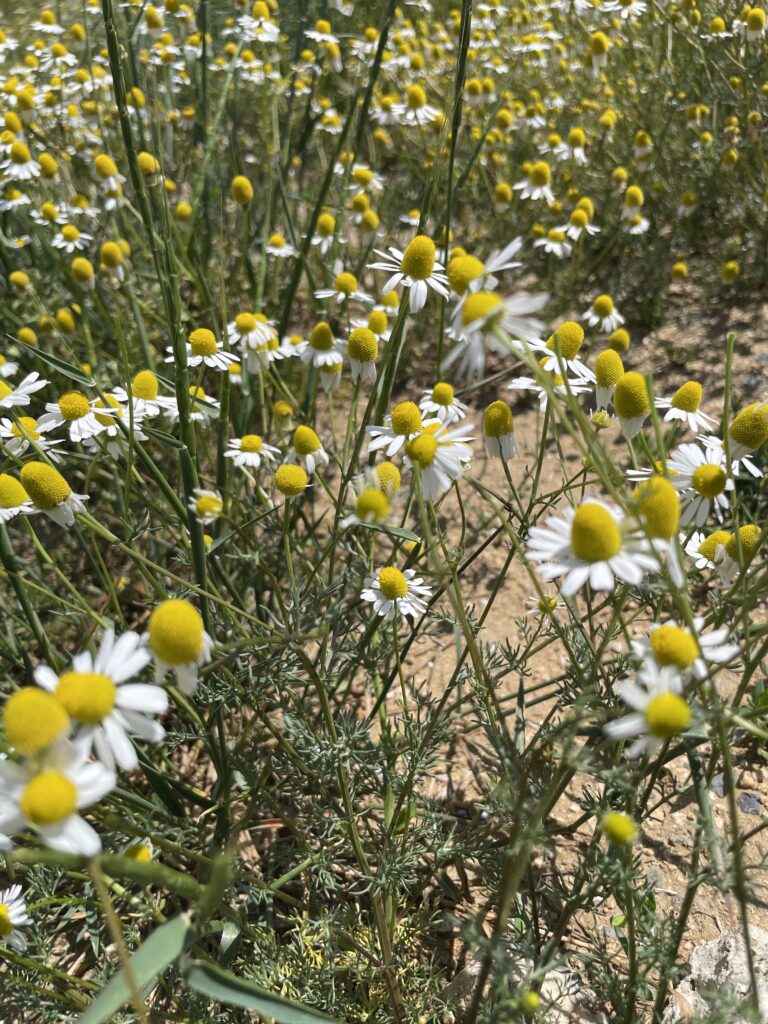
A Closer Look Into Chamomile Ancestry
Let’s get a bit more geeky in here hehe!
Chamomile refers mainly to two famous species:
- German chamomile (Matricaria chamomilla)
- Roman chamomile (Chamaemelum nobile)
They belong to the daisy family, the enormous Asteraceae family.
Their flowers look deceptively simple:
white petals,
golden center,
sun-like geometry.
But chamomile became one of the most beloved medicinal plants in human history.
How ancient is chamomile?
Chamomile belongs to the Asteraceae family — and this family is extremely ancient.
Scientific estimates suggest the Asteraceae lineage evolved roughly 85–90 million years ago, during the Late Cretaceous period.
That means:
the ancestral relatives of chamomile were evolving while dinosaurs still existed.
So when you drink chamomile tea, you are encountering a botanical lineage with roots stretching toward prehistoric Earth.
Its softness is so so so ancient.
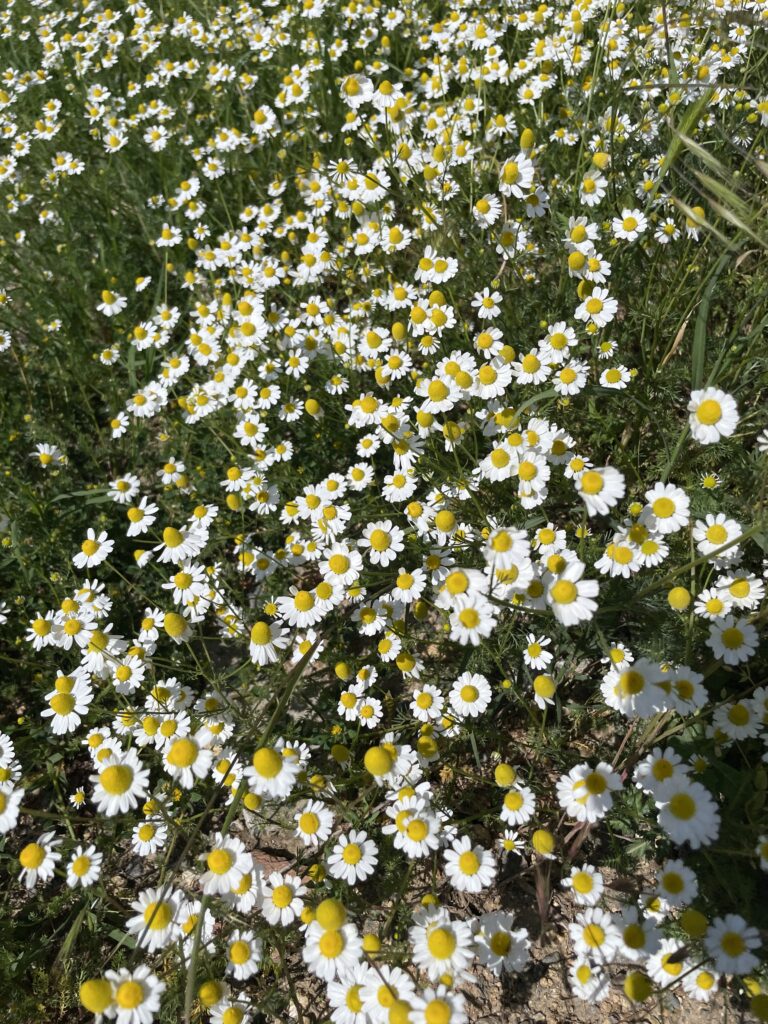
How Long Have Humans Used Chamomile?
Humans have used chamomile medicinally for thousands of years — at least since:
- ancient Egypt,
- Greece,
- Rome,
- and early Middle Eastern herbal traditions.
It appears in:
- ancient medical writings,
- monastery herbals,
- folk medicine,
- women’s healing traditions,
- and household remedies across Europe and the Middle East.
Chamomile has one of the longest continuously documented histories of herbal use in Europe.
In many ways, it became:
the herb of ordinary tenderness.
Not rare.
Not reserved only for the “elite”.
But intimately recognized as a part of daily life. And deeply trusted.
Chamomile, Ancient Egypt & The Solar Mystery
The ancient Egyptians especially revered chamomile.
Some traditions associated it with the sun god Ra because of its golden center resembling the sun.
It was used:
- medicinally,
- cosmetically,
- ceremonially,
- and possibly in funerary contexts.
There are even accounts of chamomile motifs appearing in ancient Egyptian decorative art and burial symbolism.
This creates a fascinating symbolic paradox:
Chamomile is calming and moonlike emotionally…
yet visually and symbolically it carries solar imagery.
It becomes:
“the gentle sun.”
Not blazing, fierce power.
But healing, gentle warmth.
Why Chamomile Is So Emotionally Comforting
Chamomile contains compounds such as:
- apigenin,
- chamazulene,
- bisabolol,
- flavonoids,
- and volatile oils.
Apigenin is especially famous because it binds to certain receptors in the brain associated with relaxation and sleepiness.
Its scent is often described as:
- apple-like,
- honeyed,
- herbaceous,
- warm,
- grassy,
- softly sweet.
In fact, the name “chamomile” comes from Greek roots meaning:
“ground apple.”
And unlike overpowering floral scents, chamomile’s aroma tends to feel:
- safe,
- familiar,
- maternal,
- and emotionally regulating.
Many people unconsciously associate it with:
- childhood,
- bedtime,
- care,
- rest,
- and recovery.
Traditional Health Uses of Chamomile
Historically, chamomile has been long used for:
- sleep support,
- anxiety,
- digestive discomfort,
- cramps,
- skin irritation,
- inflammation,
- headaches,
- fevers,
- nervous tension,
- and wound care.
Modern research especially studies its:
- calming effects,
- anti-inflammatory properties,
- antioxidant compounds,
- and digestive support potential.
It became one of the world’s archetypal “comfort herbs.”
Archetypally, What Does Chamomile Represent?
Chamomile has an incredibly distinct archetypal energy.
1. Gentle Healing
Chamomile does not symbolize dramatic, loud, intense transformation.
It symbolizes:
soft restoration after overwhelm.
It is the archetype of:
- tender recovery,
- nervous system exhale,
- emotional decompression.
2. The Quiet Caregiver
Chamomile often represents:
- maternal care,
- humble wisdom,
- domestic healing,
- emotional reassurance,
- kindness without spectacle.
Not the healer who performs miracles publicly —
but the healer who quietly sits beside your bed.
3. Resilience Through Softness
One of the most beautiful symbolic facts:
chamomile flowers are delicate-looking, but the plant itself is surprisingly hardy.
This gave rise to symbolic associations with:
- resilience,
- persistence,
- gentle endurance.
In old gardening traditions there was even a saying:
“The more chamomile is trodden upon, the faster it grows.”
Which is almost mythic psychologically.
4. Sacred Rest
Chamomile represents permission to:
- stop,
- soften,
- sleep,
- cry,
- regulate,
- restore,
- and return to equilibrium.
In a civilization obsessed with intensity and noise, chamomile archetypally whispers:
the most powerful healing can be quiet: just let yourself soften, rest, relax…
Chamomile in Folklore & Magick
In European folk traditions, chamomile was associated with:
- purification,
- protection,
- peaceful sleep,
- luck,
- prosperity,
- and calming emotional storms.
It was sometimes scattered in homes to cleanse energy or attract peace.
I personally adore adding dried chamomile to my bedsheets (inside).
Also, I love placing chamomile around the front door for blessings and protection, as well as keeping some at my altar to invite more of its energy into my sacred space.
Some traditions believed chamomile invited:
- gentle spirits,
- harmonious dreams,
- and emotional reconciliation.
Ultimately, chamomile energy magick is about:
- comfort,
- grounding,
- softening,
- restoring simplicity.
Perhaps, one the most beautiful things about chamomile:
Chamomile became so beloved worldwide not because it was extremely rare or extravagant,
but because generation after generation discovered:
this small flower genuinely helps humans feel calmer.
For thousands of years,
people have turned to chamomile during:
- grief,
- sickness,
- insomnia,
- heartbreak,
- exhaustion,
- and fear.
That continuity itself is sacred, and I adore to feel it and explore it deeper when I consciously tune into working with chamomile 🙂
Now, let’s share some inspiring fresh ideas about how to use chamomile!
Okay, I think we should agree that a warm, cozy chamomile cup of tea is absolutely a cult classic!
But there are so many other amazing ways to playfully diversify our chamomile intake.
Cooking with Chamomile
Chamomile is great for food recipes (and it doesn’t have to be anything too complicated)! One of my personal favorites is adding it to my pancakes mix: so simple and so divine. Such a beautiful way to add a dash of calmness to your breakfast while also harnessing chamomile’s health benefits and its graceful effects for solar plexus chakra healing.
Chamomile Iced Tea
Spring and summer season always remind me to add more chamomile to my health routine in a way that matches the seasons’ vibe: we need something both cooling, refreshing, and calming, and chamomile ice tea works wonders!
Just boil some chamomile and let it cool down. Strain the flowers, add some ice cubes, and add some sliced fruit (I love combining it with strawberries, peaches, apples: whatever I have handy in my kitchen).
Combining it with some cucumber slices is also a great fit.
Optionally, adding some fresh seasonal green herbs (like peppermint) is deliciously magickal, too.
Chamomile in Self-Care Beauty Rituals
Chamomile is always a staple in my herbal infusions mixtures for face steam bath rituals, as well as in feet soak & hair care ritual baths.
I love how self care rituals allow us to harness the benefits of chamomile in a different way. I cannot compare this to drinking chamomile tea or adding chamomile to food: each pathway is unique but I highly encourage you to experience the amazing effects of chamomile’s direct contact with your skin and hair (ritual showers) and respiratory (ritual steam bath).
In my self-care ritual herbal mini bags, I love combining chamomile with other mutually-complementary herbs, too: this increases the energetic effects.
Chamomile is simply unparalleled in offering deep healing to the body while simultaneously acting so gentle.
A brilliant herb for spell jars, as well.
If you’re curious to dive deeper into chamomile magick, wisdom, and healing, check out my ritual tools & ritual gift boxes. I’d love to create something personalized for you to offer you maximized benefits and joy!
Gathering, drying and preserving organic chamomile will always and forever be one of my most favorite rituals. I infuse all my herbal creations with dedication, devotion, and care, and I’m genuinely so happy when they reach the right people.
Establishing a Conscious Relationship with Chamomile
If you feel drawn to chamomile, that’s not at all random!
You may be guided to establish a deeper connection with this unique plant spirit: a connection built on deepened awareness and ritual intimacy with chamomile plant ally.
Actually, this article about chamomile that you’re reading right now was born exactly through my ritual practice of consciously seeking deeper relationship with chamomile spirit!
Even though I’ve known chamomile for so long, I felt my intuition asking me to go even deeper: this is one of the things I adore the most about working with plant spirits: the connection is so vast, so multilayered, it’s literally a never-ending spiral, providing so much healing wisdom and personal empowerment!!!
Honestly, I have been feeling very emotionally overwhelmed lately, especially because I am so devoted to bring my creative projects to fruition: I love my creative work with all my pure heart but sometimes I don’t know how to stop and give myself proper rest. This is why chamomile called me deeper recently, while I been struggling with tummy discomfort and restlessness.
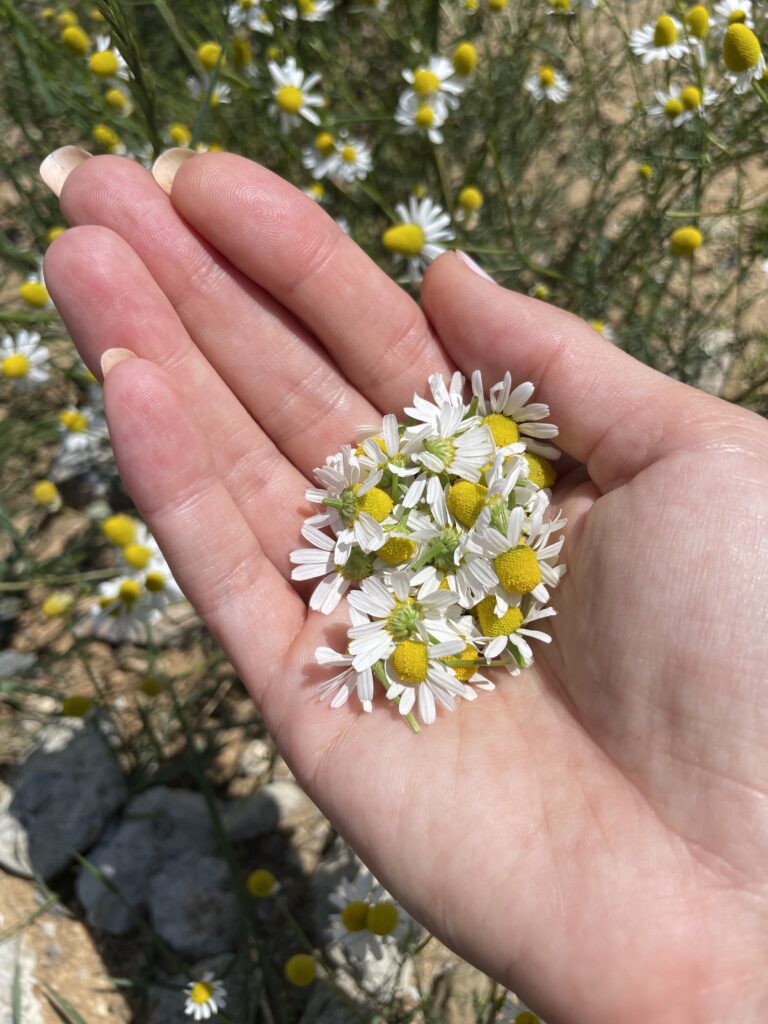
So, I went picking chamomile in the forest, and I intentionally put more of my conscious awareness into why chamomile is calling me and how can I expand our connection *currently my altar is overflowing with fresh picked chamomile flowers that I am currently drying, and I feel so blessed to experience chamomile’s spirit so so so close to me when I’m doing my daily prayers!*
Deepening Connection with Chamomile
Chamomile is often approached simply as a calming tea, yet for centuries it has also been experienced as a gentle yet extremely powerful plant ally associated with restoration, softness, emotional grounding, and sacred rest.
Building a more conscious relationship with chamomile can transform ordinary moments of self-care into quiet rituals of reconnection — with the body, the nervous system, the solar plexus energy centre, and the slower rhythms of life itself.
Working intentionally with chamomile in ritual magick helps to support:
- emotional soothing,
- promote moments of stillness,
- nervous system regulation,
- rest after overwhelm,
- and a deeper sense of grounded tenderness toward oneself.
Rather than forcing intensity, chamomile invites softness. It reminds us that healing does not always arrive dramatically, and that the deepest healing lives in the quiet moments we allow ourselves to slow down, to be fully in the here and now…
Chamomile Ritual Uses & Embodied Connection
Chamomile Foot Soaks
Soaking the feet in warm chamomile-infused water is a deeply grounding evening ritual.
In many traditions, the feet symbolize:
- connection to the Earth,
- movement through life,
- and energetic grounding.
A chamomile foot bath creates a feeling of release after overwhelm, physical softening, clearing stagnant energies, calmness, reconnection with the body after overwhelm.
It’s not only chamomile spirit itself doing the ancient magick: the secret ingredient is your PRESENCE and your WILLINGNESS to set some time for yourself, for your body, for your well-being…
The ritual itself is just as meaningful as the physical properties of the herb.
Leave a Reply